
Printed Personalized Books vs. Digital Apps: A 2026 Guide for Kids
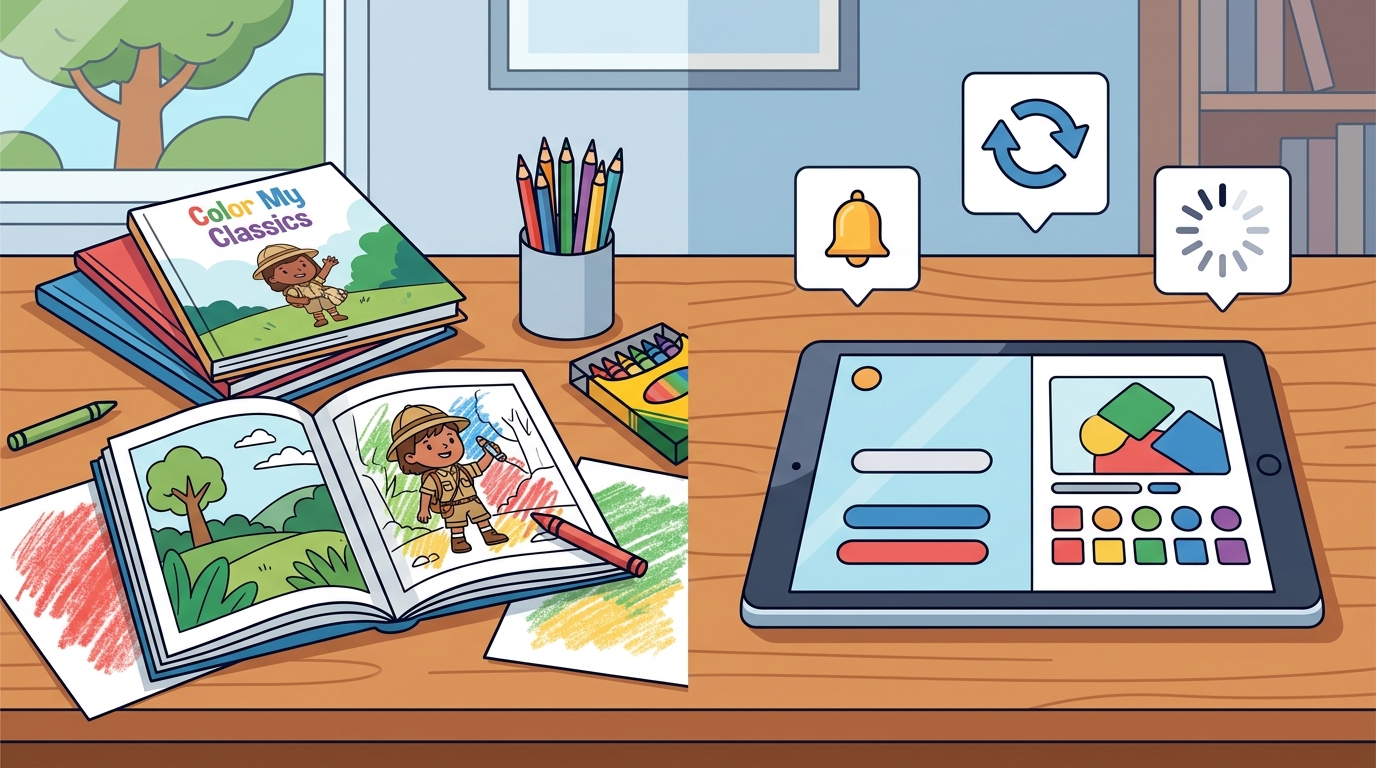
Printed personalized books offer a tactile, screen-free experience that supports focused reading and shared family time. Unlike digital apps, physical books eliminate constant notifications and allow children to physically interact with the story. This guide explores how Color My Classics compares to digital tools across five key developmental areas.
Reading Comprehension
Reading comprehension is the ability to understand and interpret written text. When children read from a physical page, they often process information more deeply than when reading on a screen. The linear nature of a book helps young readers track their progress and understand the flow of a narrative.
Focus and Retention
Digital devices often present text in a way that encourages skimming. In contrast, a printed book requires the reader to move through the story at a steady pace. This steady pace can help children retain plot details and character motivations better. For personalized books, the child is the hero, which increases their emotional investment in the story's outcome.
Visual Processing
Physical books allow for a stable visual field. The text does not shift, scroll, or change size unexpectedly. This stability is crucial for developing readers who are still learning to decode words. By keeping the visual environment consistent, printed books reduce the cognitive load associated with navigating a digital interface.
Tactile Multisensory Experience
A tactile multisensory experience is a learning method that engages touch, sight, and sometimes sound simultaneously. Physical books provide a rich sensory environment that digital screens cannot fully replicate. The feel of the paper, the weight of the book, and the act of turning pages all contribute to a deeper connection with the material.
The Power of Touch
Children learn through their hands. When they hold a book, they are engaging in a physical act that grounds them in the present moment. This physical interaction can make the story feel more real and immediate. In personalized Oz adventures, the child can color the scenes, adding another layer of tactile engagement to the reading experience.
Motor Skill Development
Handling a book helps develop fine motor skills. Gripping the pages, turning them gently, and holding a crayon or pencil are all physical actions that strengthen hand muscles. These skills are foundational for writing and other academic tasks. Digital apps, while interactive, do not provide the same resistance or physical feedback that paper does.
Word Learning
Contextual Clues
Repetition and Review
Children often reread their favorite books. With a physical book, they can revisit specific pages to reinforce new words. This self-directed repetition is a key part of how children internalize vocabulary. The ability to flip back to a previous page is a physical action that reinforces the structure of the story and the placement of new words within it.
Screen Distractions
Screen distractions are the various notifications, ads, and interactive elements that pull a user's attention away from the primary task. Digital apps are designed to be engaging, but this often comes at the cost of focus. A printed book offers a distraction-free environment where the only thing to focus on is the story.
The Attention Economy
Digital platforms are built to capture and hold attention. This can lead to fragmented focus, where a child's attention is constantly shifting between the story and other digital stimuli. In a physical book, the child's attention is directed solely toward the narrative. This undivided attention is essential for deep reading and comprehension.
Creating a Calm Space
Reading a physical book can be a calming activity. The absence of bright screens and sudden sounds helps create a peaceful environment. This is particularly important for children who may be overstimulated by digital media. A quiet moment with a book can help children regulate their emotions and prepare for sleep or other quiet activities.
Shared Reading Engagement
Shared reading engagement is the interactive process of reading together, where a caregiver and child discuss the story. Physical books facilitate this interaction more naturally than digital apps. The book becomes a shared object that both parties can point to, discuss, and explore together.
Conversation and Connection
When a child is the hero of a personalized story, it creates a natural conversation starter. Caregivers can ask questions about the child's choices and feelings in the story. This dialogue strengthens the bond between the caregiver and the child. It also encourages the child to express their thoughts and emotions, which is a key part of social and emotional development.
Family Rituals
Reading together can become a cherished family ritual. The physical book serves as a tangible reminder of this shared time. It can be passed down through generations, becoming a family heirloom. This sense of continuity and tradition adds emotional weight to the reading experience. Digital apps, while convenient, do not offer the same sense of permanence and shared history.
Comparison Table
| Feature | Printed Personalized Book | Digital App |
|---|---|---|
| Tactile Experience | High (Paper, Weight, Texture) | Low (Touchscreen only) |
| Screen Distractions | None | High (Notifications, Ads) |
| Shared Interaction | High (Physical object to share) | Moderate (Shared screen) |
| Personalization | Deep (Child as hero in story) | Variable (Often limited) |
| Longevity | High (Keepsake) | Low (Dependent on device) |
Key Takeaways
- The tactile nature of physical books engages multiple senses, aiding in motor skill development.
- Word learning is enhanced by the ability to visually connect text with illustrations in a static format.
- Physical books eliminate screen distractions, allowing for undivided attention and focus.
- Shared reading with a physical book fosters stronger caregiver-child connections and family rituals.
- Personalized books, where the child is the hero, increase emotional investment in the story.
- Choosing a printed book can be a way to create a lasting keepsake for a child.
Frequently Asked Questions
Is a printed book better for young children than a tablet?
For young children, printed books are often better because they provide a tactile experience and reduce screen time. The physical interaction with the book helps develop fine motor skills and focus.
How does personalization affect a child's engagement?
Personalization increases engagement by making the child the protagonist. When a child sees themselves in the story, they are more likely to be invested in the outcome and participate actively in the reading.
Can digital apps replace physical books?
Digital apps can complement physical books, but they do not replace them. Apps offer interactive features, but physical books provide a unique sensory and social experience that screens cannot replicate.
What age is best for personalized coloring books?
Personalized coloring books are suitable for a wide range of ages. Younger children can enjoy the illustrations, while older children can engage with the story and personalization elements.
Are personalized books a good gift?
Yes, personalized books make excellent gifts because they are unique and meaningful. They show thoughtfulness and create a lasting memory for the recipient.
How do I choose the right story for a child?
Choose a story that aligns with the child's interests. If they love adventure, a story like Oz might be a good fit. If they enjoy whimsy, Wonderland could be a better choice.
Conclusion
When deciding between a printed personalized book and a digital app, consider the unique benefits of each. Printed books offer a tactile, distraction-free experience that supports deep reading and shared family time. At Color My Classics, we create personalized books that turn children into the heroes of their favorite stories. Explore our gift guide to find the perfect adventure for your child. If you have questions, you can always for more information.