Reading Comprehension
Reading comprehension is the ability to understand and interpret written text. When children read from a physical book, they often process information more deeply than when reading on a screen. The linear nature of a printed page helps young readers track their progress and maintain focus on the narrative flow.
Focus and Attention Span
Physical books provide a static environment that encourages sustained attention. Without the temptation of hyperlinks or pop-ups, children can immerse themselves in the story. This focused state is crucial for developing the ability to follow complex narratives and understand character motivations.
Tactile Multisensory Experience
A tactile multisensory experience is a learning method that engages touch, sight, and sometimes sound to reinforce memory. Holding a physical book allows children to feel the weight of the pages and the texture of the paper. This physical interaction creates a stronger memory anchor than the flat, uniform surface of a tablet or phone screen.
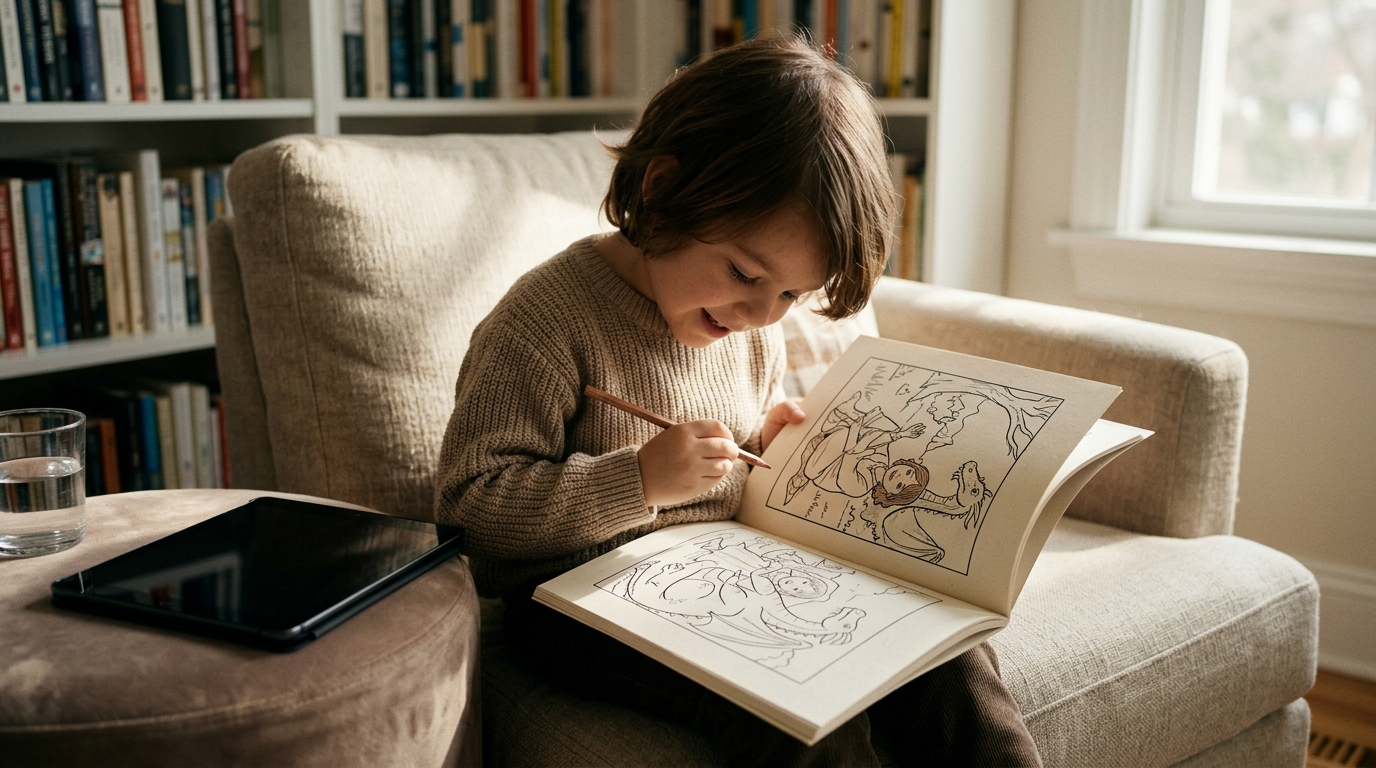
When a child colors a personalized book, they are actively creating art. The act of choosing colors and applying them to the page engages fine motor skills and creative decision-making. This hands-on process transforms the book from a passive reading material into an active creative project. The physical object becomes a keepsake that the child can hold, display, and revisit, reinforcing the emotional connection to the story.
Motor Skills Development
Word Learning
Word learning is the process of acquiring new vocabulary and understanding its meaning in context. Physical books provide a stable visual reference for new words. Children can look back and forth between the text and the illustration to infer meaning. This visual-textual pairing is a powerful tool for vocabulary acquisition.
In a personalized book, the child’s name appears throughout the text. This repetition of a familiar word in a new context can help children recognize and understand the structure of sentences. The stability of the printed page allows for repeated reading, which is key to mastering new words. Digital screens can change dynamically, which may make it harder for young readers to retain the visual layout of the text.
Repetition and Reinforcement
Physical books encourage rereading. Children often enjoy reading the same book multiple times, which reinforces word recognition and fluency. The ability to flip back to a specific page is easier in a physical book than in a digital app, where navigation can be less intuitive for young users.
Screen Distractions
Screen distractions are interruptions caused by digital devices that reduce focus and attention. Digital apps are designed to be engaging, often using bright colors, sounds, and animations to keep users interested. While these features can be fun, they can also fragment a child’s attention. Notifications, ads, and other interactive elements can pull the child away from the story.
Managing Screen Time
Many parents struggle to balance screen time with other activities. Physical books provide a natural break from digital devices. They can be used during travel, quiet time, or as a reward for completing tasks. This helps establish healthy habits around technology use.
Shared Reading Engagement
Personalized books enhance shared reading by making the child the hero of the story. This personalization encourages the child to participate more actively in the reading process. They can point to themselves in the illustrations and discuss their role in the adventure. This level of engagement fosters a deeper connection between the reader and the text, as well as between the family members sharing the experience.
Family Bonding
Reading together is a valuable family activity. It provides an opportunity for conversation, laughter, and emotional connection. A personalized book becomes a shared memory, a physical object that reminds the family of the time they spent together. This emotional value is difficult to replicate with a digital app, which is often used individually.
Comparison Table
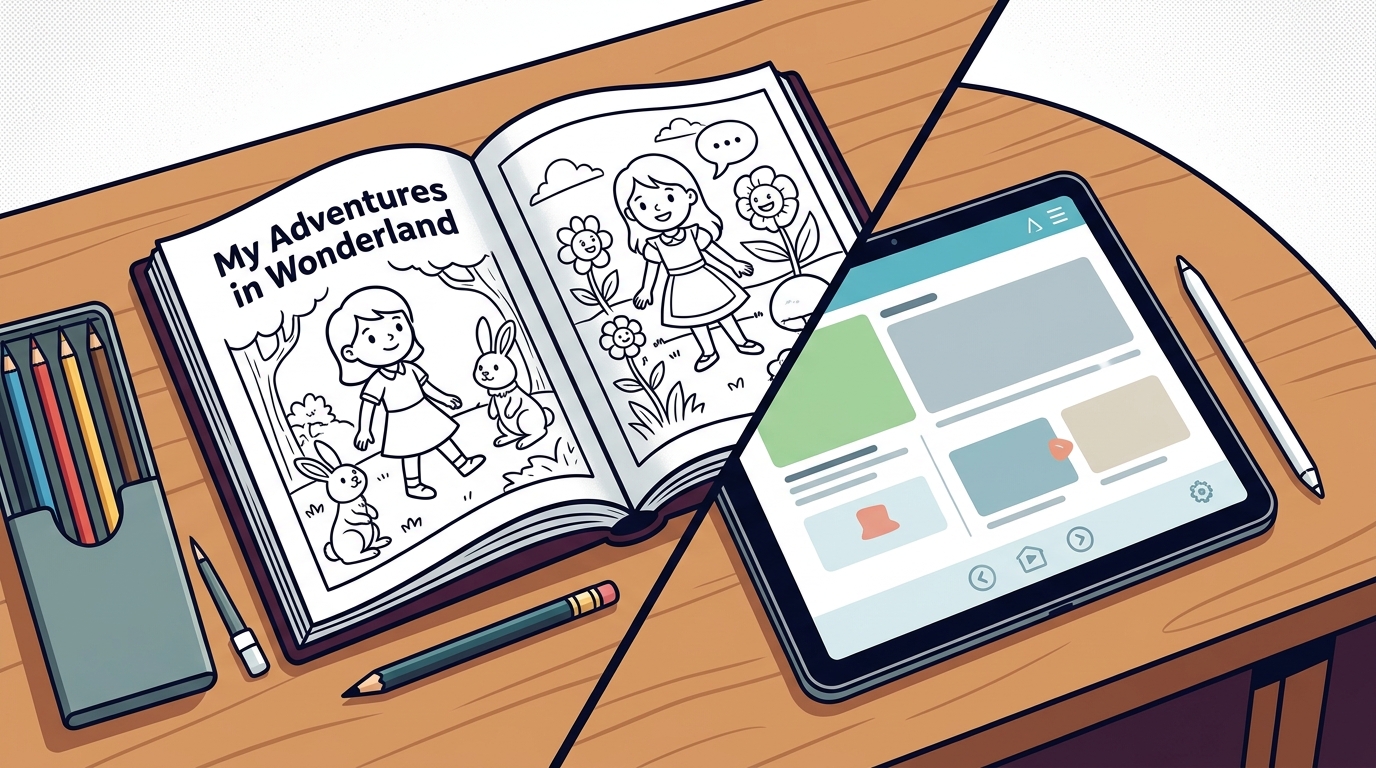
| Feature | Printed Personalized Book | Digital App |
|---|---|---|
| Tactile Experience | High (physical pages, coloring) | Low (flat screen) |
| Screen Distractions | None | High (notifications, ads) |
| Shared Reading | Easy (large format, shared view) | Difficult (small screen, individual use) |
| Personalization | Deep (child as hero, name in text) | Variable (often superficial) |
| Longevity | Keepsake (physical object) | Temporary (digital file) |
Key Takeaways
- Tactile interaction with physical pages enhances memory and fine motor skills.
- Printed books eliminate screen distractions, allowing for sustained attention.
- Personalized books increase child engagement by making them the hero of the story.
- Physical books serve as lasting keepsakes, unlike temporary digital files.
Frequently Asked Questions
Is a printed book better than a digital app for learning?
For many children, printed books are better for learning because they reduce distractions and provide a tactile experience. However, digital apps can be useful for specific skills like phonics or interactive storytelling. The best choice depends on the child’s needs and learning style.
How does personalization affect a child’s interest in reading?
Personalization can significantly increase a child’s interest in reading. When a child sees themselves as the hero of the story, they are more motivated to read and understand the plot. This personal connection makes the reading experience more engaging and memorable.
Can digital apps replace physical books?
Digital apps can complement physical books, but they are not a complete replacement. Physical books offer unique benefits, such as tactile interaction and a distraction-free environment, that digital apps cannot fully replicate. A balanced approach that includes both can be most effective.
What age is best for personalized coloring books?
Personalized coloring books are suitable for a wide range of ages. Younger children can enjoy the coloring aspect, while older children can focus on the story and personalization. The key is to choose a story and complexity level that matches the child’s interests and abilities.
How can I encourage my child to read more?
Encourage your child to read more by choosing books that interest them, reading together, and making reading a regular part of your routine. Personalized books can be a great way to spark interest, as the child is the main character. Celebrate their progress and make reading a positive experience.
Are personalized books a good gift?
Yes, personalized books make excellent gifts. They are unique, thoughtful, and create a lasting memory. A book featuring the child as the hero of a classic story is a special present that they will treasure for years to come.