7 Accessibility Features Personalized Coloring Books Should Have for All Children
Accessibility in personalized coloring books means designing the physical book, the digital creation process, and the visual content so that children with diverse physical, cognitive, and sensory needs can participate fully. A truly accessible product removes barriers at every stage, from uploading a photo to holding the finished pages. This listicle outlines seven critical features that ensure every child can enjoy the experience of starring in their own story.
1. High-Contrast Line Art for Visual Clarity
2. Large, Simple Page Layouts
Minimal text and large, uncluttered illustrations help children with cognitive or attention challenges stay focused. Overcrowded pages can be overwhelming for children with autism spectrum disorder or ADHD. By keeping the primary character and key story elements prominent, the book remains approachable. This layout allows the child to process one scene at a time without feeling pressured by excessive detail.
3. Durable, Easy-to-Hold Page Formats
4. Intuitive Digital Upload Process
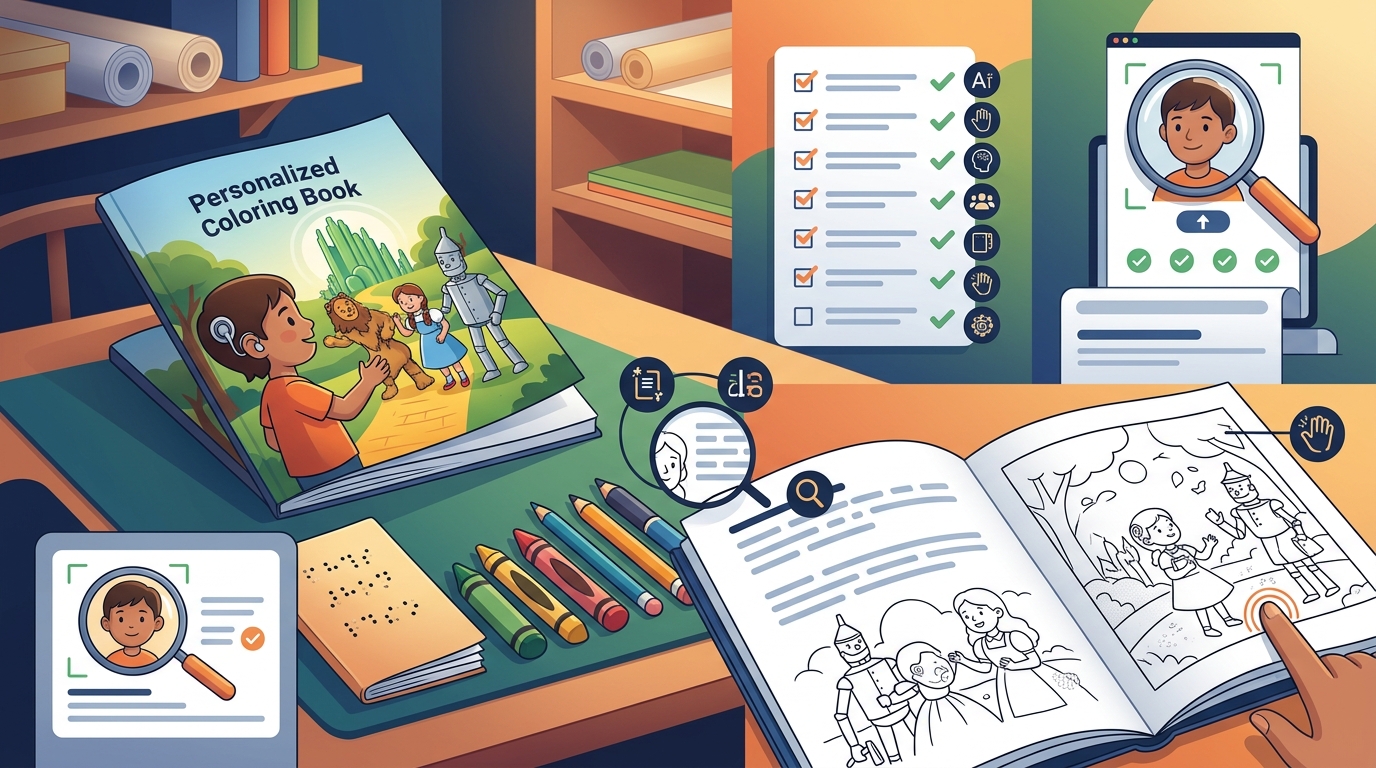
A simple, step-by-step interface for uploading photos ensures caregivers can create the book without complex technical skills. Accessibility extends to the creation process itself. Parents of children with special needs often manage multiple devices and apps, so a streamlined upload flow is essential. Clear instructions and immediate visual feedback help users confirm that the photo is suitable before finalizing the order, reducing anxiety and errors.
5. Predictable and Familiar Story Structures
Using well-known classic tales provides a cognitive anchor for children who thrive on routine and predictability. Children with developmental delays or anxiety may feel more secure when the narrative follows a familiar pattern. The child knows the story arc, which allows them to focus on the personalization aspect. This predictability reduces cognitive load and supports a sense of accomplishment as they complete each page.
6. Clear, Readable Typography
7. Personalized Name Integration
Choosing the Right Book for Your Child
When selecting a personalized coloring book, prioritize the specific needs of the child. If visual clarity is the primary concern, look for high-contrast line art and large layouts. If fine motor skills are a challenge, choose a durable format that is easy to hold. For children who need cognitive support, familiar stories and clear typography are key. By matching the book's features to the child's abilities, you create an inclusive experience that celebrates their creativity.
Frequently Asked Questions
What is the best paper type for children with limited grip strength?
Thicker, heavier paper stock is generally better for children with limited grip strength. It resists tearing and bending, allowing the child to hold the page more securely while using crayons or markers. This durability reduces the need for constant page turning or assistance from a caregiver.
Can children with color vision differences enjoy these books?
Yes, because the books are line art, they do not rely on pre-printed colors. Children with color vision differences can choose any colors they prefer, making the experience fully accessible. The focus is on the shape and outline, not on matching specific hues.
How does the photo upload process work for accessibility?
The upload process is designed to be simple, requiring only a clear, front-facing photo. The interface provides visual cues to ensure the photo is suitable, such as indicating if the face is too small or obscured. This reduces the technical barrier for caregivers and ensures a high-quality result.
Are these books suitable for children with autism?
Many children with autism find personalized coloring books engaging due to the predictability of the story and the sensory satisfaction of coloring. The familiar narrative structure and the personalization element can provide a calming and rewarding activity. However, individual preferences vary, so it is best to observe the child's response to the specific design.
Do the books include braille or audio features?
How can I ensure the book is age-appropriate for a child with special needs?
Consider the child's developmental age rather than their chronological age when selecting a story. A story that is simple and repetitive may be more suitable for a child with cognitive delays. The personalization feature allows the child to connect with the story on a personal level, regardless of the complexity of the plot.
Start Your Child's Adventure
Explore the Wizard of Oz coloring book or the Alice in Wonderland coloring book to see how these accessibility features come to life. You can also check out the Peter Pan coloring book for a different adventure. Visit the FAQ page for more details on photo requirements and shipping. To create a book that fits your child's unique needs, for personalized guidance.