Personalized Coloring Books for Children with Different Abilities
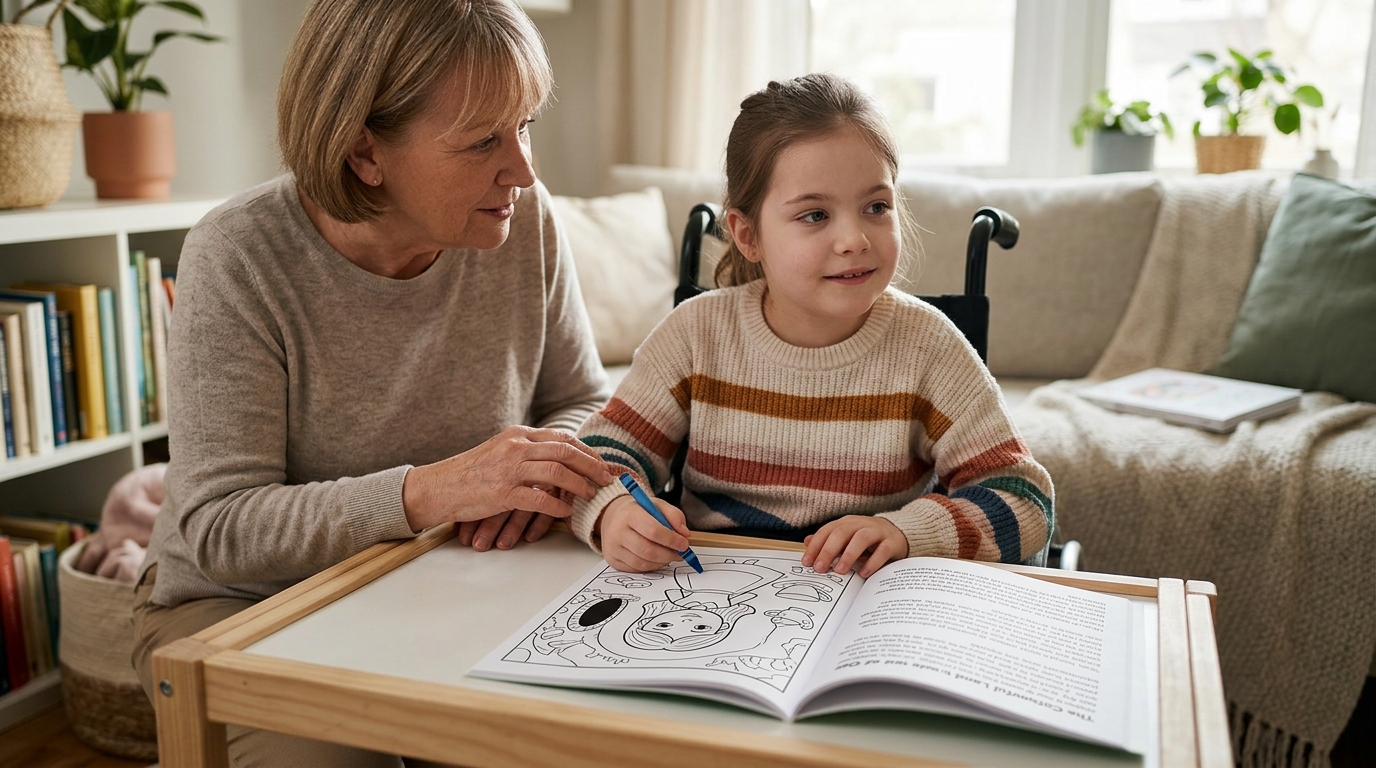
Personalized coloring books are accessible to children with different abilities when the physical format, page layout, and personalization process reduce cognitive and motor barriers. Color My Classics supports this by offering a printed, screen-free experience where a child's own face appears in the story, which can increase engagement for neurodivergent or visually impaired learners.
Physical Format and Motor Accessibility
Page Layout and Visual Clarity
Clear, high-contrast line art is essential for children with visual processing differences. Color My Classics uses bold outlines in its illustrations, which helps children distinguish shapes and boundaries. This clarity supports children who struggle with visual crowding or who need distinct edges to guide their coloring.
Binding and Durability
The choice between softcover and hardcover affects how a child interacts with the book. A hardcover binding provides a sturdier base, which is helpful for children who press hard while coloring. This durability ensures the book remains flat and usable over multiple sessions, which is important for children who need repetition to build confidence.
Cognitive Load and Personalization
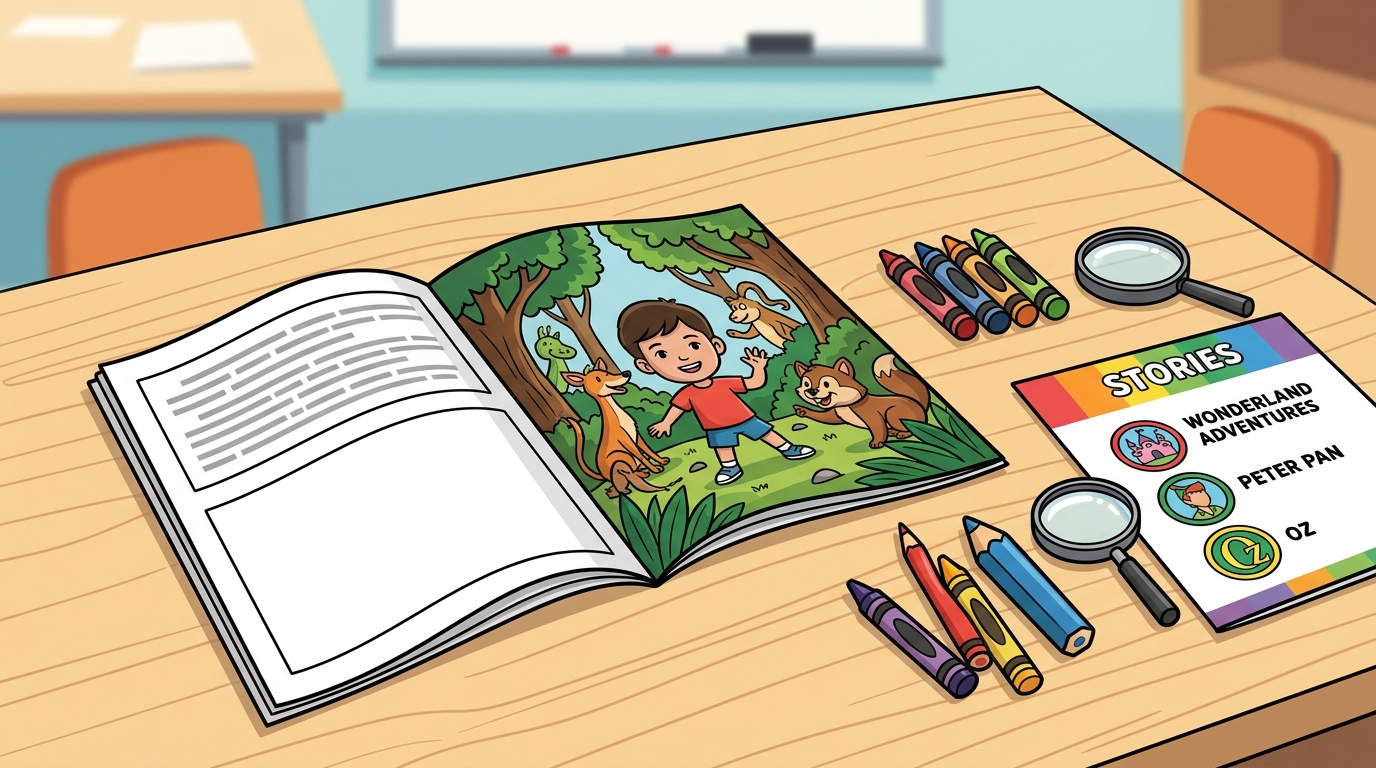
Personalization reduces the cognitive load required to engage with a story. When a child sees their own face in the book, the narrative becomes immediately familiar and relevant. This direct connection can help children with attention deficits stay focused on the task at hand.
The Role of Familiar Stories
Photo Upload and Privacy
The process of creating the book requires uploading a photo. Color My Classics ensures that uploaded photos are permanently deleted immediately after artwork generation. This privacy commitment is crucial for families who are concerned about data security. The platform does not use photos to train AI models, which adds a layer of trust for parents of children with special needs.
Comparison of Personalization Options
| Feature | Photo-Likeness Books (Color My Classics) | Name-Only Storybooks | Generic Coloring Books |
|---|---|---|---|
| Visual Engagement | High (Child's face in art) | Low (Name in text only) | Medium (Static characters) |
| Cognitive Barrier | Low (Familiar + Personal) | Medium (Familiar only) | High (Unfamiliar characters) | Motor Support | Printed (Stable surface) | Printed (Stable surface) | Printed (Stable surface) | Privacy Risk | Low (Deleted after use) | Low (No photo) | N/A |
Photo-likeness books like those from Color My Classics offer a unique advantage by combining personal visual cues with familiar narratives. Name-only books provide personalization but lack the visual hook that can capture a distracted mind. Generic books offer no personal connection, which can make them less engaging for children who need specific triggers to start a task.
Practical Tips for Parents and Caregivers
Choosing the right book and setting up the environment can make a significant difference. Start with a story the child already knows. If a child loves Peter Pan, choose that title to leverage their existing interest. Provide a variety of coloring tools, such as thick crayons or markers, to accommodate different motor skills.
Creating a Calm Space
Designate a quiet area for coloring. Reduce background noise and visual clutter. For children with sensory sensitivities, a simple table and a single light source can be more effective than a busy playroom. The goal is to minimize distractions so the child can focus on the page.
Monitoring and Support
Key Takeaways
- Personalized faces in the artwork reduce cognitive load by making the story immediately relevant to the child.
- High-contrast line art in books like Color My Classics helps children with visual processing differences.
- Privacy is a key factor; Color My Classics deletes uploaded photos immediately after generation.
- Hardcover bindings offer durability for children who press hard while coloring.
Frequently Asked Questions
Are personalized coloring books suitable for children with autism?
Yes, they can be very suitable. The combination of a familiar story and the child's own face creates a predictable and engaging experience. This can help reduce anxiety and increase focus for children on the autism spectrum.
Does Color My Classics store the photos I upload?
No. Uploaded photos are permanently deleted immediately after the artwork is generated. The company does not use these photos to train AI models or for any other purpose.
What kind of photo works best for the personalization?
A clear, front-facing headshot with good lighting works best. Ensure the full face is visible and avoid sunglasses or hats. The hairstyle should be as you want it to appear in the book.
Can I order a book for a child with fine motor difficulties?
Yes. The printed format is stable and allows the use of thick crayons or markers. The bold outlines in the illustrations also help guide the child's hand, making it easier to stay within the lines.
How long does it take to receive the book?
Books are printed to order in 3 to 5 business days. Shipping is free within the United States. You will receive a tracking number via email once the book ships.
Is the book only for kids?
No. While the main audience is ages 4 to 12, many adults buy these books as nostalgic gifts or for their own enjoyment. The personalization works for anyone who loves classic stories.
Conclusion
Accessibility in personalized coloring books comes down to reducing barriers to engagement. By choosing a printed format with clear visuals and personal touches, you create a space where a child can express themselves freely. Color My Classics offers a thoughtful approach to this, combining privacy, durability, and personalization. To see how your child might look in their favorite story, you can create your adventure today.